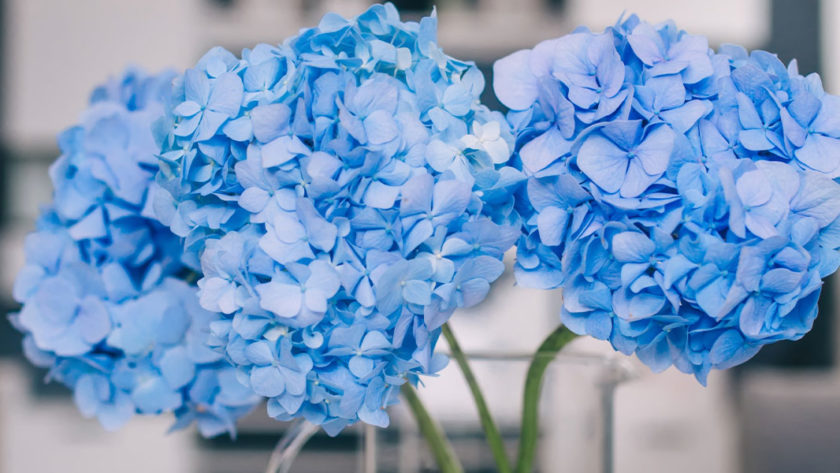
Can’t get enough of hydrangeas? Neither can we!
Usually available in the summer and autumn, hydrangeas are a true show-stopper in any bouquet, sporting huge showy blooms made up of tiny flowers. They bloom in a breathtaking variety of colours, including white, blue, pink, red, green, and purple, meaning there’s a hydrangea to suit every mood and occasion.
Keep reading to find out everything you need to know about hydrangeas.
The meaning of hydrangeas has changed over the years
Back in Victorian times, sending hydrangeas was seen as a veiled insult according to the language of flowers. The flowers were seen to symbolise pride, arrogance, and vanity – presumably due to the large size of the flowers reflecting a similarly oversized ego! Blue hydrangeas were often sent by scorned suitors, as they were said to indicate rejection and heartlessness.
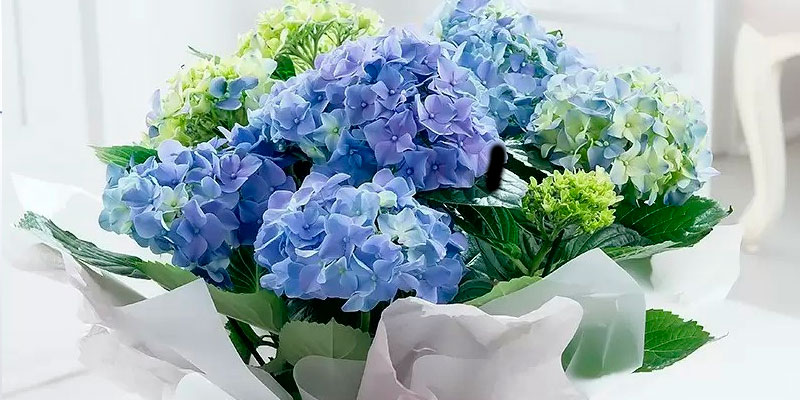
Thankfully, times have changed, and you can send hydrangeas without having to worry about any unintended insults. Nowadays, hydrangeas generally have positive meanings – pink ones symbolise heartfelt emotions and love, whilst purple hydrangeas tell someone you’d like to get to know them better. In a far cry from their older meaning, blue hydrangeas now represent forgiveness, understanding, and gratitude.
Hydrangea colour depends on the soil
If you’re growing your own hydrangeas, the colour of the blooms will often depend on your soil’s chemical composition. In fact, they can almost act like a litmus test! Acidic soils with a low pH will usually result in blue or purple flowers, whilst more alkaline soils will produce red or pink flowers. But if you’re determined to get a specific colour, there’s plenty of ways to change this; adding sulphur can lower pH, whilst lime can increase it. If you get really precise, you can even get different coloured flowers on the same hydrangea plant!
This trait is so well known that one Japanese name for hydrangeas is nanahenge, which means ‘seven transformations’, reflecting its mutable nature.
Hydrangeas love water
Hydrangeas have a very telling name, originating from the Ancient Greek words for ‘water vessel’. This name was inspired by the seed capsules on hydrangeas, which look like tiny cups!
It’s a good hint towards hydrangea care too. When they’re cut, they need lots of water to stay healthy and fresh, so if you receive a beautiful bunch make sure to give them plenty of water and replace it regularly.
Hydrangeas are hay fever friendly flowers
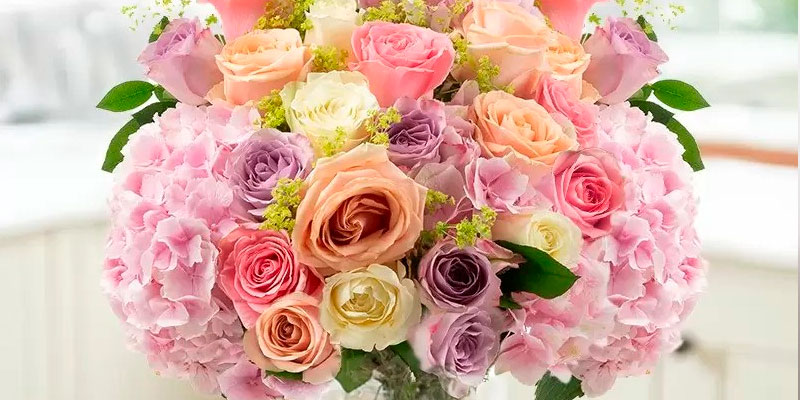
Cut flowers can be tricky if you have hay fever, but hydrangeas tend to be a safe bet. Wind-pollinated flowers are usually the worst offenders, as they have light pollen that becomes airborne very easily. Hydrangeas, however, are insect-pollinated, so they have heavy and sticky pollen that stays put.
Hydrangeas are easy to dry at home
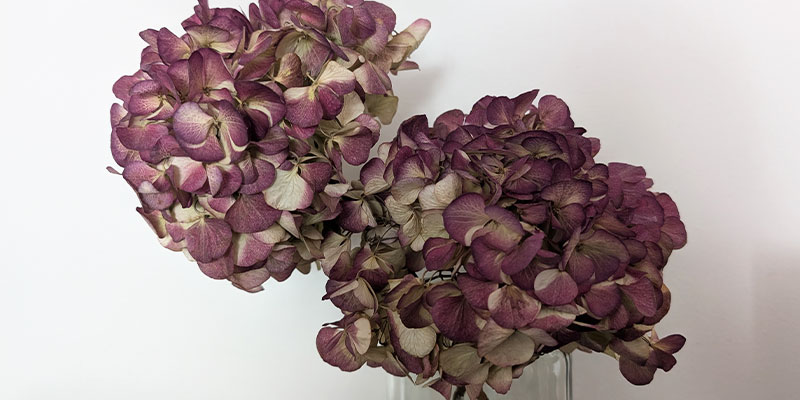
Want to keep your hydrangea bouquet for longer? You’re in luck, as hydrangeas are one of the easiest flowers to dry at home. Simply let the water in the vase evaporate over time, and the hydrangeas will dry out to create a long-lasting centrepiece. It can also be worth trimming the stems that were sat in water so they they don’t become mouldy. Alternatively, you can hang them upside down in a cool location to air dry them.
Once they’re ready, try not to move them around, as the dried petals can be quite delicate.
Hydrangeas have been around for millions of years
Hydrangeas are an ancient species; fossils have been discovered in North America that are estimated to be over 40 millions years old. Despite this, most species of hydrangea are native to east Asia, with only a few types found in America.
It’s believed hydrangeas were first cultivated in Japan and they have a rich cultural history there, with the flowers depicted in art and literature dating back to 700AD. Ama-cha, a sweet tea made from hydrangea leaves is also served in ceremonies celebrating Buddha’s birthday in Japan, and the blooming of hydrangeas is celebrated in festivals which draw tourists from around the world.
On the other hand, hydrangeas are actually a relatively new introduction to Europe, having first been imported from Japan and North America in the 1700s. Botanists discovered hydrangeas were easy to propagate, and hardy in cooler temperatures, and hydrangeas rapidly grew in popularity to become the quintessential garden plant we know today.
Brighten up your home with our beautiful collection of hydrangea plants and bouquets, available with next day delivery nationwide.