Often associated with royalty, elegance, and creativity, purple flowers are among the most aesthetic in the plant kingdom.
Their rich, vivid hues can range from soft lavender and lilac to deep violet and indigo, adding depth and sophistication to gardens and landscapes. A favourite among gardeners, florists, and nature enthusiasts alike, purple flowers can be used to convey success or spiritual awareness, or just to add a pop of colour. Whether they’re growing in delicate clusters or tall, architectural spikes, purple flowers will always catch the eye in a garden or bouquet.
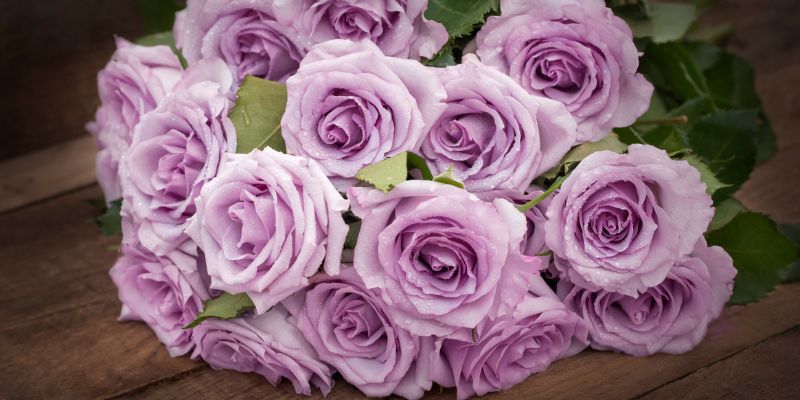
Roses
Purple roses are a beautiful choice for gardens, ranging in hue from soft lavender to deep violet. Unlike traditional varieties, purple roses are not naturally occurring but have been developed through selective breeding and hybridisation. Often associated with enchantment, mystery, and love at first sight, popular varieties include the Rosa ‘Blue Moon’, known for its large, lilac blooms, and the Rosa ‘Rhapsody in Blue’, a shrub rose with semi-double flowers that begins as a bright plum colour, before fading to a slate blue shade. Purple roses are often used as focal points in mixed borders or dedicated rose beds, as they deliver a bright contrast against red or pink roses.
Lilies
Who doesn’t love lilies? Elegant and eye-catching, purple lilies such as the ‘Purple Prince’ perform well in the British climate, particularly when they’re planted in sheltered spots that protect them from strong winds or gales. They have deep purple or deep pink-coloured petals, which often have a subtle fragrance, making them popular in floral arrangements and country gardens. They’re especially loved by gardeners for their ability to add height and vivid colour as well as being relatively low-maintenance, and you’ll often see them in mixed borders, containers, or cutting gardens. Plus, they can return year after year with proper care.
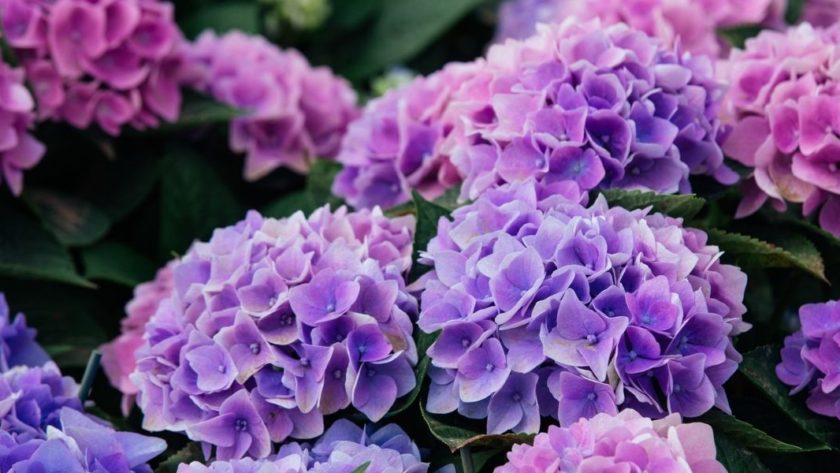
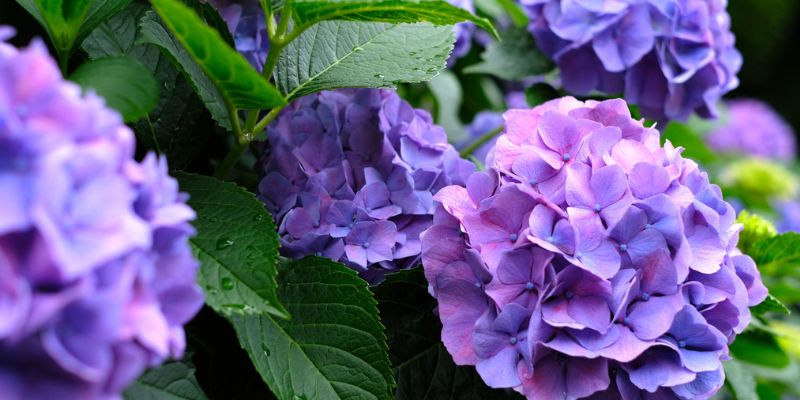
Hydrangeas
One of the most intriguing qualities of hydrangeas is their ability to change colour based on the soil pH. Acidic soils (with a pH below 6) tend to produce blue flowers, while more alkaline soils (with a pH above 7) result in pink blooms. To achieve a true purple hue, gardeners often aim for a slightly acidic to neutral soil (around pH 6.0 to 6.5), sometimes using aluminium sulphate or adjusting the pH with amendments like ericaceous compost (a specialist acidic compost).
While generally low-maintenance, hydrangeas do best with consistent watering during dry spells and light pruning in late winter or early spring to encourage healthy new growth. Their blooms emerge in early to mid-summer and often last well into autumn, where they fade into softer, paler tones.
Lisianthus
Purple lisianthus, also known as prairie gentian, is a delicate and elegant flowering plant that produces rose-like blooms. Naturally found in the warmer regions of North America, the lisianthus has adapted well to the UK’s climate. It’s typically grown as an annual from seed, and under cover in early spring, as it requires a long growing season and warmth to develop fully. While it can be grown outdoors in the summer, it needs a sheltered, sunny position and well-drained, nutrient-rich soil to thrive. It’s often grown under glass in greenhouses or polytunnels, especially by commercial growers supplying florists. Despite their reputation for being a bit temperamental, give lisianthus the right conditions, and you’ll be rewarded with stunning, long-lasting purple blooms.
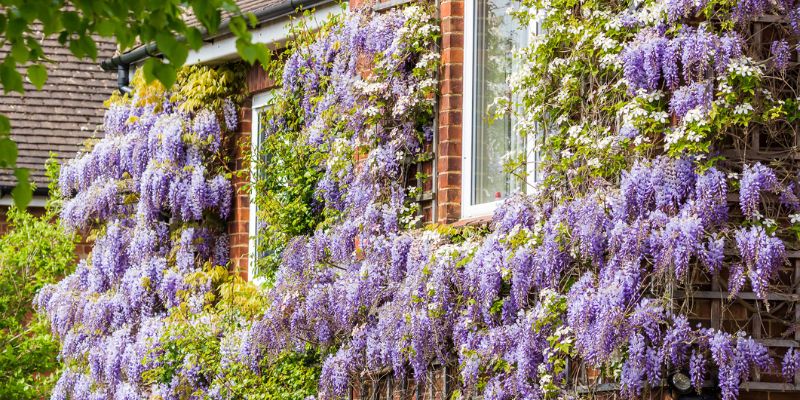
Wisteria
Wisteria is found in parts of Asia and North America, and is especially admired for its dramatic, cascading blooms, which range in colour from soft lilacs to deeper purples and pinks. It can grow to a large size (some species can grow up to 3 feet long) and often require sturdy support structures – some Asian varieties of wisteria are considered invasive if it’s not carefully managed. Wisteria typically blooms in late spring, with some varieties offering a second flush of flowers around July or August.
Wisteria flowers also hold symbolic meaning in various cultures, representing love, longevity, and endurance. In Japanese culture, it is often associated with elegance and tenderness, frequently appearing in traditional art, and is often seen at weddings and in ornamental gardens.
Iris
The iris flower is known for its unique foliage and eye-catching blooms that come in a wide array of colours, including rich purples, blues, yellows, whites, and even bi-coloured varieties. Fun fact: the plant derives its name from the Greek word for ‘rainbow’ as a nod to its colour diversity. The flower typically features three upright petals and three drooping petals, with common types including the bearded iris, Siberian iris and Japanese iris, each suited to slightly different growing conditions. But in general, irises prefer full sun and well-drained soil, and many varieties are drought-tolerant once they’re fully established.
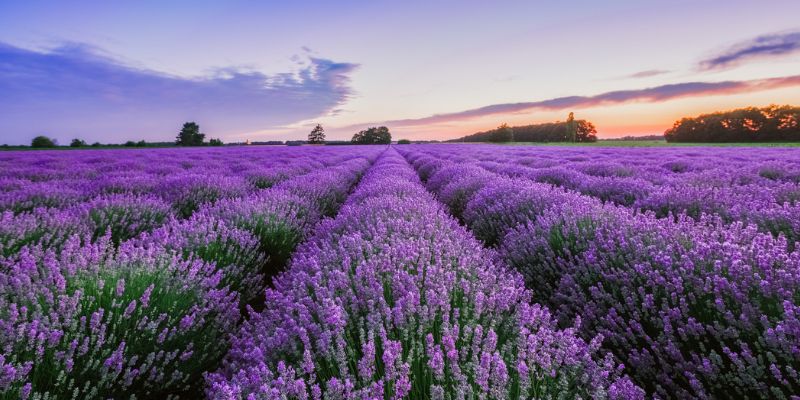
Lavender
Lavender is an evergreen shrub beloved for its soothing scent and clusters of small flowers in shades of purple, blue, or sometimes pink and white, depending on the variety. Its natural environment is the Mediterranean, although it’s cultivated all around the world, and it actually belongs to the mint family (scientifically known as Lamiaceae). Lavender is a favourite among pollinators like bees and butterflies, and it also has natural pest-repelling properties, making it a beneficial addition to any garden.
One of the most popular species of lavender is the Lavandula angustifolia, commonly referred to as English lavender, which is renowned for its high-quality essential oil that’s used in aromatherapy, perfumery, and natural remedies. You’ll often see its dried flowers in potpourri, or in pouches and sachets, designed to keep near your bed for its calming fragrance, or to pop in drawers to keep your clothes smelling fresh.
Delphinium
The delphinium flower is easily recognised, thanks to its height (it can grow anywhere from 2 to 6 feet tall), and features densely packed flowers in vivid shades of purple, blue, pink, and white. Named after the Greek word ‘delphis’, meaning dolphin, due to the dolphin-shaped buds of some species, this purple plant is often found naturally growing in the high mountain regions of tropical Africa, and thrives in cool climates.
The most beloved species is the Delphinium elatum, known for its tall flower spikes and stunning hues, particularly vivid blues and purples. While they are visually captivating, it’s important to note that all parts of the delphinium are toxic if ingested, making them unsuitable for gardens frequented by pets or small children.
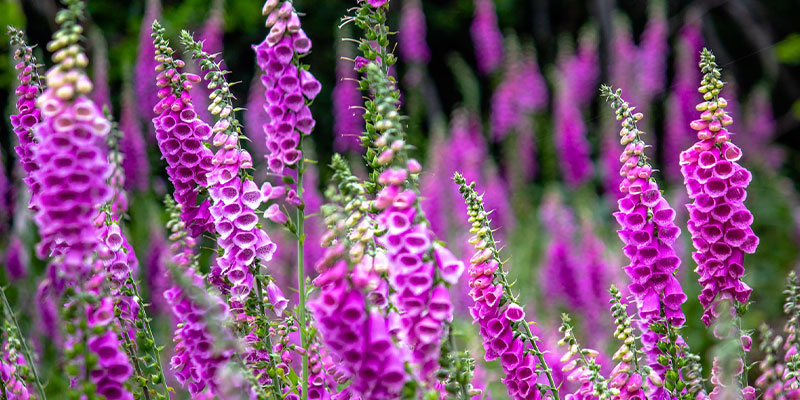
Foxglove
It’s not difficult to spot the foxglove flower with its towering bell-shaped blooms. Commonly found in woodlands, meadows and country gardens, the foxglove can reach heights of 2 to 5 feet, making them excellent for adding vertical interest to gardens. Each bloom has darker markings inside, which serve as visual guides for insects, enhancing pollination.
While beautiful, all parts of the foxglove plant are highly toxic if ingested, as they contain potent cardiac glycosides, a natural substance that can affect heart function. This has made the foxglove a symbol of danger in folklore and literature, and is often associated with fairies and woodland magic in mythology.
Geranium
Loved for their vibrant blooms, attractive foliage and being easy to grow, geraniums are a popular choice for British gardens and are commonly grown in containers, hanging baskets, and garden beds. They produce five petals in a wide array of colours, including purple, red, pink, and white, often with eye-catching patterns or contrasting centres.
Geraniums also have aromatic foliage, which is sometimes used in essential oils and herbal remedies, and some varieties called scented geraniums emit rose, lemon, or mint scents when touched. Geraniums are often associated with happiness and protection, making them a meaningful and cheerful addition to gardens.