It’s time to deck the halls with all your favourite Christmas flowers, be that a poinsettia on your countertop, holly and ivy adorning your picture frames, or mistletoe hanging expectantly from a doorway.
Regal reds, forest greens and winter-wonderland whites are the colours we reach for once December rolls around, and there’s a host of beautiful blooms to choose from in those merry traditional hues. It’s not all about the Christmas tree, you know!
You’ll probably already know and love most of the festive flowers on our list, but the symbolism and stories behind them may surprise you. From amaryllises to chrysanthemums, Christmas roses to cacti, there are many hidden meanings to discover and enchanting tales to be told.
Have a read below, ready to regale your friends and family by the fire, mulled wine and mince pie in hand, of course!
Poinsettia
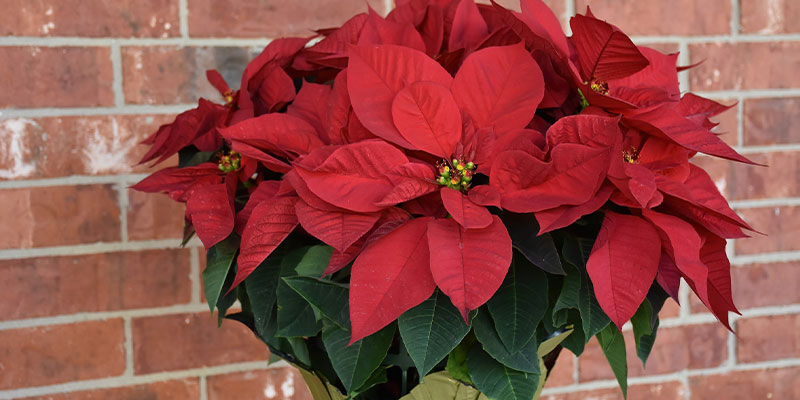
Is it really Christmas without a poinsettia sitting proudly on your coffee table? Not here in the UK, where some eight million of the popular Mexican plants are sold every year. Symbols of festive goodwill and cheer, they also have religious associations, with their red, star-shaped leaves said to represent the blood of Christ and the Star of Bethlehem that guided the three wise men to Mary, Joseph and the baby Jesus lying in a manger.
In its native country, the poinsettia is called the ‘Flor de Nochebuena’ (Holy Night flower). Why? Legend has it that back in the 16th century, a little girl called Pepita was too poor to buy a gift to take to her local Christmas Eve service. When an angel appeared and told her to pluck a posy of weeds and place that at the altar instead, she did, and her humble offering burst into a stunning poinsettia. The name ‘poinsettia’ came from the first US ambassador to Mexico, Joel Roberts Poinsett, who brought the flower back to the States in the early 19th century – interesting, but we prefer the Mexican folklore!
Mistletoe
Think of mistletoe, and chances are you think of the modern tradition of kissing under a sprig of the stuff hanging in a doorway. This harks back to Norse mythology, when it symbolised healing: enemies who met beneath those pearly white berries would lay down their arms and exchange friendly greetings in an act of peace and goodwill. Meanwhile in England, during the Georgian period, mistletoe would be hung from a popular Christmas decoration called a kissing bough – an extravagant globe of greenery, fruit, flowers and ribbons. A berry would be plucked from the bough after every kiss, and when all the berries were gone, the kissing had to stop!
Christmas Rose (Hellebore)
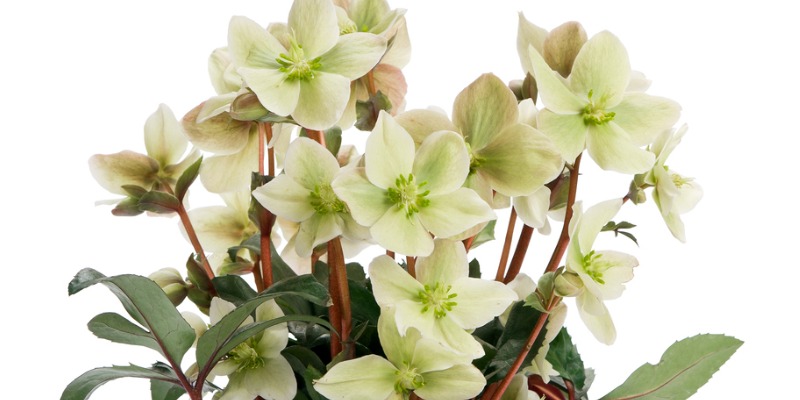
One of the only flowers that laughs in the face of frost and blooms through a blanket of snow, the resilient hellebore, or Christmas rose, has lovely meanings of hope, serenity and miracles. It has a similar story behind it to the poinsettia, with myth telling how its heavenly white petals and dark green leaves sprang from the tears of a shepherd girl, who was crying because she had no gift to bring the baby Jesus. Many Christians now plant Christmas roses near their doorways to welcome Christ into their homes.
Holly
Come December, you’ll find pretty yet prickly holly decorating every nook and cranny of our homes. Celtic tradition links it to protection from evil spirits and good luck during winter, while its evergreen status denotes eternal life. In Christianity, the red berries symbolise Christ’s blood, while the sharp leaves represent the crown of thorns he wore for his crucifixion. The best thing about holly? It’s fun to forage for in any nearby woodland – the perfect wintry family activity. Just remember to wear gloves!
Amaryllis
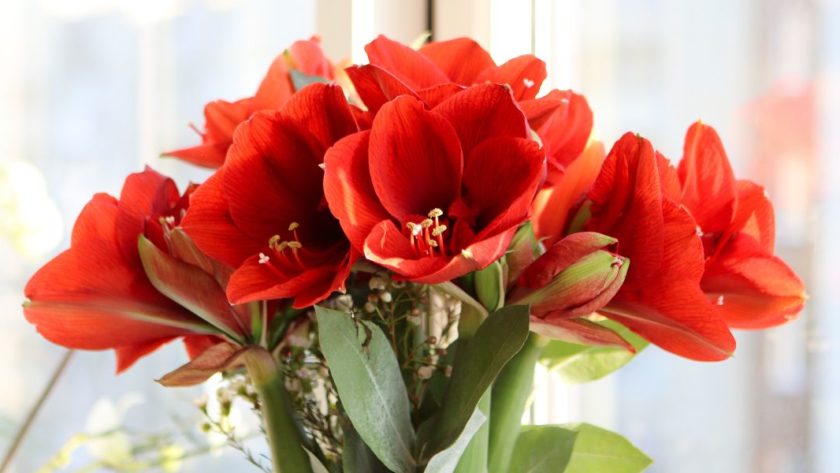
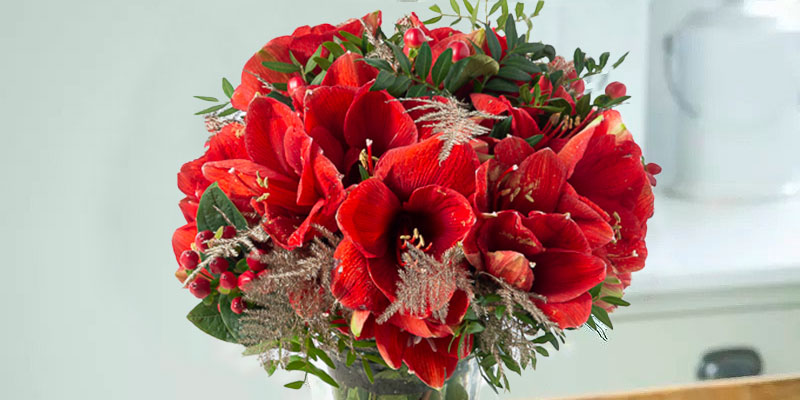
The perfect alternative if you find poinsettias a bit ‘done’, the dramatic, trumpet-like amaryllis, or Christmas lily, represents beauty, confidence, strength and determination (can we take all four?). Its ability to grow tall from a single bulb buried in soil reflects achievement emerging from potential, making it a thoughtful gift for anyone facing an upcoming personal challenge like a big race or exam.
As for its name, Greek legend tells of a beautiful shepherdess called Amaryllis, who pierced her heart with a golden arrow every day in a bid to get a shepherd called Alteo to notice her. Eventually, after 30 days, her blood blossomed into a gorgeous red flower and her crush finally paid her attention. If you’ve got your eye on a special somebody this Christmas, might we suggest a less dramatic tactic? Perhaps a pink rose, meaning admiration, instead?
Christmas Cactus
Easy to grow and care for (phew!), this tropical houseplant, officially known as schlumbergera, comes in a choice of pink, red and white. Hailing from the Brazilian rainforest, the fact that it blooms during the darkest, gloomiest time of the year means it symbolises steadfast faith and endurance. It also represents loyalty and family bonds, as it can live for up to 30 years. Christmas cacti are often passed down generations as family heirlooms, along with the heartwarming story of a Brazilian girl who prayed for a sign of Christmas, and was blessed with a jungle blooming with colourful schlumbergeras when she awoke on Christmas morning. Why not make a wish on yours?
Rose
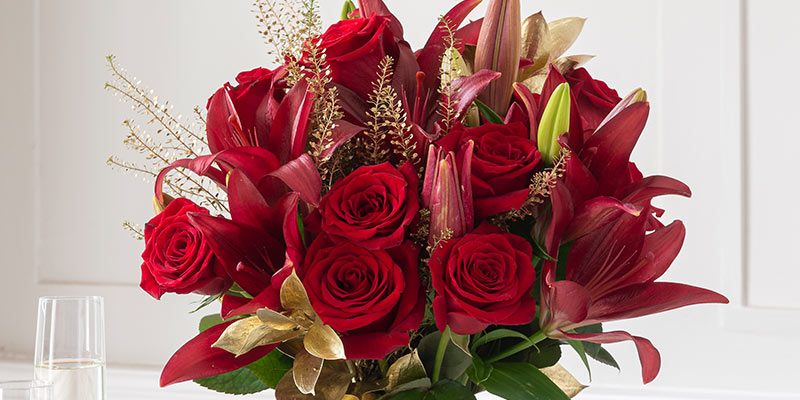
One of the strongest flowers in Christian iconography, the red rose is held up as a symbol of Christ’s love and sacrifice, as well as being associated with the Virgin Mary, the ‘rose without thorns’. Not just for Valentine’s Day, it’s often found in Christmas wreaths and church decorations, and is known as ‘the queen of flowers’ for good reason. Unmatched in beauty, you’ll find red roses in most of our festive bouquets this year, partnered with lilies, carnations, pine cones, gold-sprayed foliage and even shiny baubles! Or, for something a little different, try lilac roses instead.
Ivy
Did you know that in the traditional Christmas pairing of holly and ivy, the holly is said to represent masculine energy, while the ivy balances it with feminine? This evergreen climbing plant famously stays glossy green year-round, clinging tightly to walls and surviving harsh winters. Thanks to its toughness, it also symbolises immortality, fidelity and strong bonds. That’s women for you!
Christmas Orchid
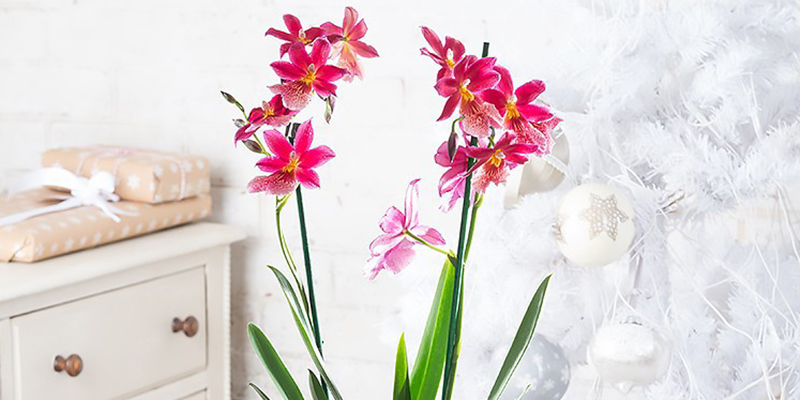
The Christmas, or Star of Bethlehem, orchid epitomises elegance with its white, star-shaped petals – a reputation won during the Victorian era when orchids were considered prized exotic gifts among wealthy households. Held up as symbols of rare, refined beauty, some writers of the time described them as ‘winter’s quiet angels’, with a Christmas orchid considered a gentle blessing that brought grace and warmth to the darkest days of the year. Don’t miss our range of orchids, including the fragrant dendrobium variety.
Chrysanthemum
You might think of white chrysanthemums as funeral flowers, but an old German legend links them with gratitude and blessings. The charming story goes that a beggar stumbled upon a peasant family’s Black Forest home during a Christmas Eve snowstorm. Despite their own poverty, they wrapped their guest in blankets and generously shared their supper with him. Once he was fed and warm, the beggar revealed himself to be Christ and vanished, leaving two white chrysanthemums on the doorstep. Today, it is German tradition to display this angelic flower at Christmas to convey willingness to offer Jesus shelter.
Paperwhite narcissus
In floriography, the Victorian language of flowers, the ‘paperwhite’ variety of narcissus carries meanings of purity, clarity and rebirth. It symbolises new beginnings and light returning after the winter solstice, and in some Mediterranean cultures it promises a prosperous new year. If you already can’t wait for spring, this is the perfect bloom to lift your spirits and remind you that brighter, warmer days are coming. But first… Christmas!
Fill your home with Christmas flowers this holiday season, and don’t forget to send a bunch to your loved ones. Shop our joyful collection today, with next-day delivery available nationwide. Go on, spread some festive floral cheer!